

Postural Disorder Treatment & Posture Correction for Children
- In-depth analysis of medical history, movement patterns, and muscle balance for early detection of posture problems
- Early work with functional postural issues while they are still forming — real early intervention for postural problems, before compensatory patterns take hold
- A personalized pediatric posture correction program that combines postural habit correction with the restoration of healthy musculoskeletal biomechanics

Our Approach to Postural Disorders Treatment for Children
Poor posture takes root early in childhood — shaped by sedentary habits, long hours of sitting, and early functional overload. Postural problems often remain "invisible" for years, yet it is precisely during this period that muscle imbalance in children begins to form, together with weak core muscles and postural support deficits — patterns that become fixed in the body's geometry over time.
That's why we start treating spinal posture issues in children early — before rigid deformities develop and movement compensations become entrenched. Our pediatric posture correction programs begin with an in-depth biomechanical assessment and progress stage by stage, rebuilding postural control and postural stability as the child grows.
Diagnosis: Identifying the Root Cause, Not Just Symptoms
Every program starts with detailed clinical and biomechanical diagnostics — the foundation of effective orthopedic rehabilitation for children. We assess the entire postural system to catch the earliest signs of spinal curvature in children and related conditions:
- Spinal deformities: slouching, exaggerated kyphosis, hyperlordosis, or a flattened lumbar lordosis (flat back syndrome)
- Pelvic tilt and rotation, pathological inclination of the pelvis and sacrum
- Functional impairments in the hip joints, abnormal rotation of the hips
- Abnormal tilt or rotation of the head and neck
- Shoulder asymmetry and uneven shoulder blades, chest deformities
- Leg alignment problems — bow legs, knock knees, knee hyperextension (recurvatum) — and flat feet
- Disproportion between body segments in the lateral and frontal planes, leg length discrepancy
- Muscle imbalance, weak deep stabilizers, impaired postural stabilization
- Functional displacement and descent of the internal organs as a consequence of impaired support and altered body geometry
Based on these findings, we build a step-by-step posture correction plan for children — one that factors in the child's age, growth stage, and individual biomechanics. This plan becomes the roadmap for our musculoskeletal rehabilitation for posture: every stage follows directly fr om what the diagnostics reveal.
The Foundation: Pelvic Alignment and Postural Support
Correction always begins at the foundation — the position of the pelvis as the base support for the entire spine.
The spine cannot be durably straightened without first restoring pelvic symmetry and balance in the hip joints. This stage lays the groundwork for restoring spinal biomechanics and stabilizing posture.
Our scoliosis and posture therapy for children is built around every component that shapes a child's healthy posture: the pelvis as the foundation of the spine, compensatory deformities in other body segments, and the quality of the connective tissue — the factor that ultimately determines how well the results hold. From this stable base, postural retraining begins: the child's body gradually learns to hold the corrected alignment on its own.
The Spine: Restoring Biomechanics Step by Step
With the pelvis stabilized, we work through the spine sequentially — from the lumbar region up through the thoracic and cervical segments.
The goal of this stage is to restore the natural spinal curves, activate the deep stabilizing muscles, correct the remaining muscle imbalance, and — through targeted postural muscle strengthening — build a support system that holds the child's posture through everyday loads.
Compensations: Correcting Secondary Deformities
Only after the foundation and the spinal axis are aligned do we correct the secondary compensatory deformities: head and neck position, shoulder asymmetry and uneven shoulder blades, impaired weight-bearing in the lower limbs, and flat feet. This principle lets us treat the underlying causes rather than mask the visible signs.
Why the Results Are Sustainable
At the Professor Blum Center, posture correction for children is never a one-off course of exercises. It is systematic rehabilitation for children with postural problems, wh ere every stage logically builds on the previous one. Because we act early, this works as true early intervention for postural disorders — while the musculoskeletal system is still growing and responsive, especially during growth spurts.
Each stage prepares the next, which is why this musculoskeletal posture rehabilitation delivers steady, cumulative progress instead of short-lived gains. With controlled loading, a monitored range of motion, individually calibrated equipment, and continuous feedback fr om the biomechanical response of the tissues, sessions stay safe, the outcome is predictable, and the results last — without overloading a growing body.
Who Is This Program For?
This program is designed for the treatment of spinal posture issues in children with functional and pre-scoliotic conditions — cases wh ere the goal is not simply to "straighten the back," but to build a stable biomechanical foundation for growth and development. As with all of our pediatric orthopedic rehabilitation programs, every strategy is personalized, with a strong focus on results that hold steady through the growth years.
The program is recommended if your child falls into one of the following categories:
- Preschool-age children whose postural habits are still forming;
- School-age children under regular static loads — prolonged sitting, screen time posture problems, and school backpack posture strain;
- Children with a sedentary lifestyle and low levels of physical activity;
- Children with flat feet and leg alignment issues that stem from pelvic and hip joint positioning;
- Children with a history of birth trauma and early biomechanical compensations;
- Children with weak core muscles and insufficient trunk stabilization.
Understanding the Problem: How Postural Disorders Develop
Postural dysfunction in children is a functional deviation from correct spinal alignment in the frontal and sagittal planes — one that develops early and often goes unnoticed in its initial stages. During active growth, poor movement habits become fixed especially quickly, as muscle imbalances, core muscle weakness, and impaired postural support that gradually reshape the child's body geometry.
<р3>Why Posture Problems Develop So EarlyBoth internal and external factors drive poor posture in children:
The insidiousness of a "non-threatening" posture disorder lies in its unnoticed progression and the development of more severe curvatures, such as the formation of scoliosis during a child's period of rapid growth and the development of spinal disc herniation. The disrupted body geometry always divides the body into a stronger and weaker half, with the child starting to use the stronger side and saving the weaker, thereby deepening the asymmetry and creating weak links in the body.
- Connective tissue dysplasia and individual characteristics of musculoskeletal development;
- The effects of birth trauma, delayed motor development, and disrupted developmental milestones;
- A sedentary lifestyle, prolonged sitting, and heavy screen use;
- Early upright standing, heavy school bags, forced asymmetric positions, and early asymmetric sports.
This is why timely diagnosis matters so much — and why treatment should begin early, before functional deviations become locked into the child's movement patterns.
How the Problem Shows Up
Most parents notice the external signs first — but by the time they appear, postural disorders are usually already well underway:
- Slouching or a hunched back;
- One shoulder higher than the other;
- A protruding shoulder blade;
- One hip higher than the other;
- Unusual fatigue when sitting or walking;
- Recurring back pain.
Clinically, these visible signs usually map onto specific postural patterns. The most common include kyphosis in children (an exaggerated upper-back curve), hyperlordosis in children (an excessive inward curve of the lower back), and flat back syndrome in children (a loss of the spine's natural curves). Asymmetries are just as common: shoulder asymmetry in children — one shoulder or shoulder blade sitting higher than the other — and pelvic tilt in children caused by imbalance in the hips and pelvis.
Without targeted correction, these signs tend to intensify through growth spurts and puberty — growth-related postural changes can amplify existing imbalances rather than resolve them.
The Danger of Waiting for Your Child to "Grow Out of It"
Postural problems rarely stay static. Left unaddressed, they progress: stable movement compensations take hold, the body "learns" the asymmetry as its new normal, and strain builds up on individual spinal segments and joints. This affects far more than appearance — it undermines endurance, load tolerance, and the child's overall day-to-day functioning.
In some cases, functional deviations can also become the backdrop for more pronounced structural curvatures during phases of rapid growth — one more reason why the scoliosis risk in children should never be left to chance. If a structural curvature has already formed, it requires a separate, specialized approach — you can read more about our treatment for scoliosis in children on the dedicated page. Timely posture and scoliosis therapy works with the growth process rather than against it, guiding spinal development while the musculoskeletal system is still responsive — which is exactly why we recommend acting early instead of waiting for a child to "grow out of it."
-
Identifying all postural disorders through in-depth clinical and biomechanical diagnostics.
-
Restoring proper pelvic position and alignment as the foundation for subsequent spinal stabilization.
-
Step-by-step correction of deformities — from the internal structures outward to the body surface — with a focus on shaping healthy posture.
-
Improving connective tissue quality and strengthening the core musculature to create a stable postural framework.
-
Correcting compensatory issues (neck, shoulders, pelvis, legs, and feet) and restoring body symmetry.
-
Early work with predispositions and scoliosis prevention by systematically addressing their underlying biomechanical causes.
Objectives of the program
-
Restoring Body GeometryReturning the body to physiologically correct proportions by normalizing the position of the pelvis and hip joints, correcting misalignments and deformities, and building stable muscular-ligamentous support that holds each segment in its correct configuration. The result: restored body symmetry, improved postural stability, and reduced strain on the weight-bearing structures.
-
Biomechanically Precise Spinal CorrectionSystematic spinal alignment, segment by segment, moving from the pelvis upward — lumbar, thoracic, then cervical — with the result secured by the deep stabilizing muscles. This approach makes it possible to resolve postural disorders and restore muscle balance without overloading growing structures.
-
Functional Integration and Sustainable ResultsNormalizing the spatial relationships of the internal structures by correcting the body's musculoskeletal geometry and releasing myofascial compensations. In parallel, the child develops a stable, healthy movement pattern — one that helps preserve the achieved changes through the growth years and adapt to increasing loads.
Which Postural Disorders in Children Can Be Corrected?
At our Center, posture correction for children is carried out at every stage of growth — from preschool age through the teenage years.
The key principle: the earlier we begin treating postural disorders in children, the faster and more durable the results — the postural system is still plastic and responds remarkably well to correction.
The six main types of functional postural disorders we work with:
- Slouching;
- Exaggerated thoracic kyphosis;
- Exaggerated lumbar lordosis (hyperlordosis);
- Flattened lumbar lordosis (flat back);
- Postural asymmetries of the shoulder girdle and pelvis;
- Muscle imbalance and impaired postural support.
Structural spinal curvatures (such as scoliosis) require a separate, specialized program for diagnosis and management.
Patient stories

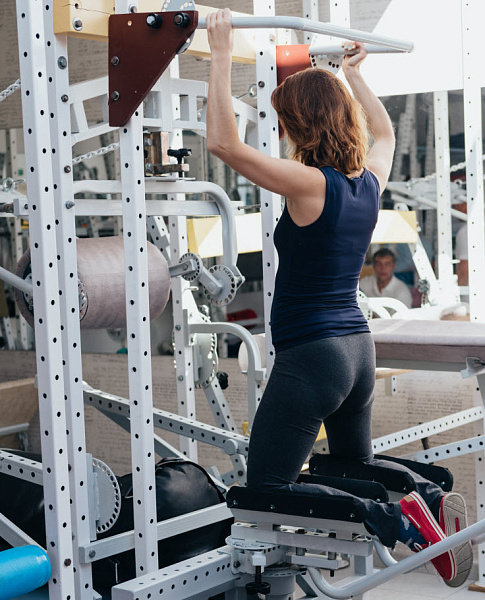
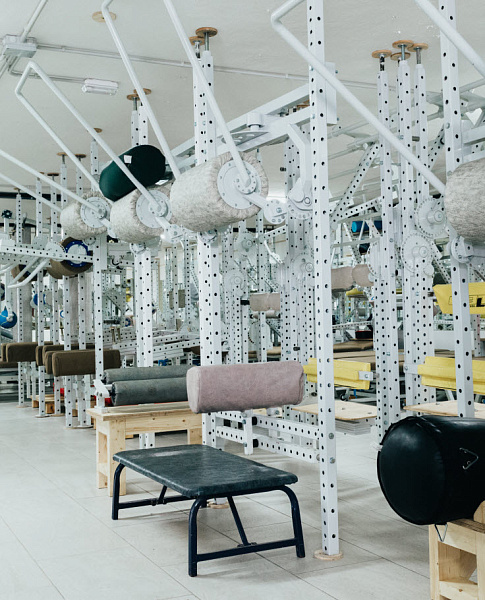
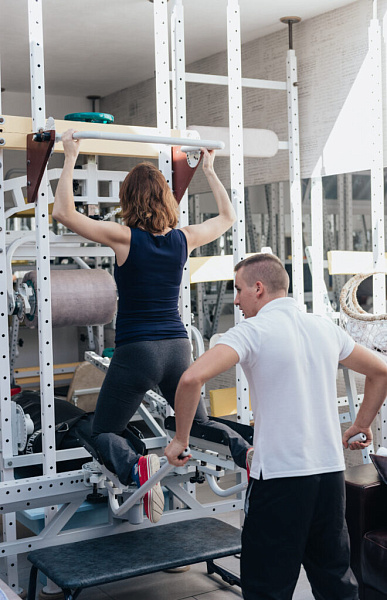
Professor Blum’s Exclusive Rehabilitation System

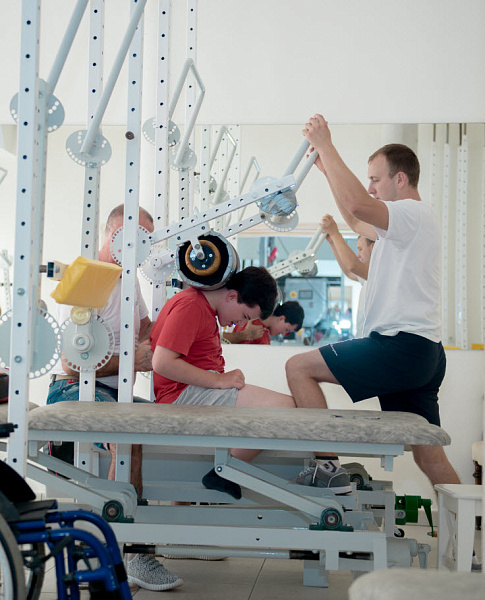
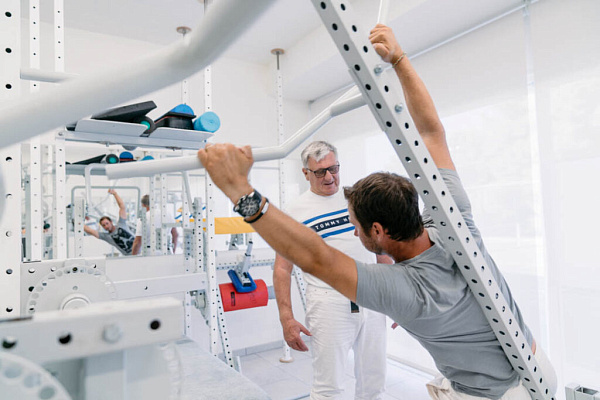
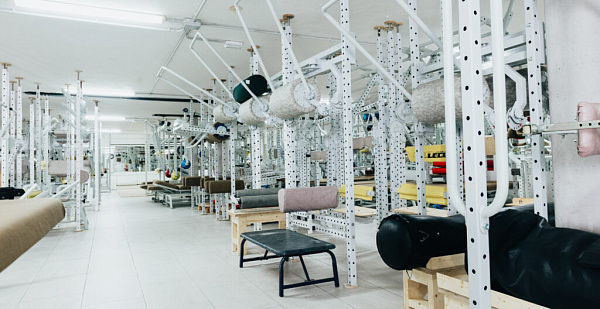
The center is located in a picturesque corner of the renowned resort town of Marbella, surrounded by cedar trees at the foot of La Concha mountain. Here, science and technology blend with nature, creating a space where the body returns to balance and harmony.
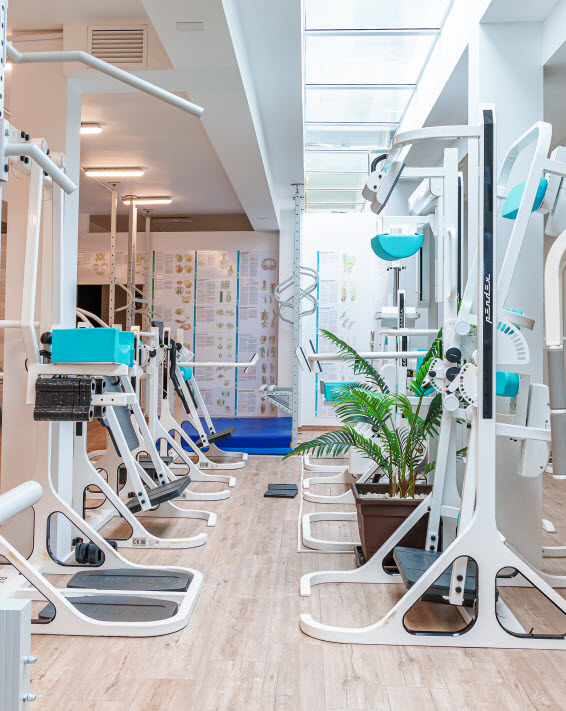
Technologies that deliver results
Select a program
- Personalized Health Recovery Programs
- Disease Prevention
- Customized Check-Up

Q&A
Yes — periods of active growth are a high-risk window. During these phases, growth-related postural changes are common: bones lengthen faster than the muscles and ligaments can adapt, so imbalances can set in quickly. This is exactly why regular monitoring, professional guidance, and timely correction matter so much during growth.
Visible asymmetries are not the only reason to reach out — functional signs matter just as much: unusual fatigue, complaints of back pain, pelvic tilt, drooping shoulders, or an unsteady gait. Very often a muscle imbalance lies behind these signs — one that becomes fixed over time and shapes the way your child's posture develops. If you recognize any of them, an assessment within one of our pediatric rehabilitation programs is the right first step.
In most cases of functional postural disorders, a brace is not the primary solution. Our strategy focuses on activating the body's own stabilizers and strengthening the deep muscles, so your child's body learns to hold the correct configuration on its own — without external fixation.
Yes — these are different conditions. Postural disorders are usually functional and respond well to correction when the underlying biomechanics are addressed in time. Scoliosis is a structural curvature that requires its own specialized diagnostic and treatment program. That's why early diagnosis matters — and why it's important to restore spinal biomechanics before changes become fixed.
In most cases, slouching is a functional issue linked to habitual positions, weak stabilizers, and uneven load on the spine. With systematic work using Professor Blum's method, gradual — and ultimately complete — restoration of healthy posture is possible without surgery: by realigning the biomechanics, switching on the deep muscles, and reshaping movement habits.
The earlier functional changes are detected, the easier and faster it is to correct the biomechanics. We work with children from preschool age — when motor patterns are actively forming and the body is adapting to upright loads. Starting early allows correction to blend gently into the growth process and prevents compensatory patterns from becoming fixed.
From four to six weeks and longer. Timeframes are always individual — they depend on the child's age, growth stage, the severity of the disorder, and the body's adaptive capacity. We build the program in stages: diagnostics → aligning the foundation → stabilization → consolidating the skills. This staged approach is what forms a postural muscle support system that holds the results as your child grows.
Yes — provided recovery starts at an early stage of the condition, the right treatment method is chosen, and the recommendations are followed consistently.
Yes, always. After rehabilitation, we provide a "home program" — practical recommendations and exercises to strengthen the back muscles and maintain core support at home, in line with the principles of pediatric physical therapy.
With careful observation, you may notice: shoulder asymmetry, unusual shoulder blade positioning, unequal space between the elbow and the waist, pelvic tilt, or a difference in leg length. In the Adams forward bend test — bending forward with straight knees — if one side of the back sits higher than the other (a rib hump or a muscle ridge on one side), that is a clear reason to see a specialist.
The cost of a course of treatment with a stay in a hotel
- Appointments and consultations
- Creating an individual program
- Conducting personal sessions
- Appointments and consultations
- Creating an individual program
- Conducting personal sessions
Other areas of work of our Center
.webp)